Sunday, February 25, 2024

toilet knowns no grace

     I  (admittedly) don't really go out of my way to read poems, so any that impact me i happen across through other sources.  One of which is "The View from Halfway Down" by Alison Tafel, for the show Bojack Horseman.  (my rendition of the poems style is at the end of the post)

"


The weak breeze whispers nothing

The water screams sublime

His feet shift, teeter-totter

Deep breath, stand back, it’s time

Toes untouch the overpass

Soon he’s water bound

Eyes locked shut but peek to see

The view from halfway down

A little wind, a summer sun

A river rich and regal

A flood of fond endorphins

Brings a calm that knows no equal

You’re flying now

You see things much more clear than from the ground

It’s all okay, it would be

Were you not now halfway down

Thrash to break from gravity

What now could slow the drop

All I’d give for toes to touch

The safety back at top

But this is it, the deed is done

Silence drowns the sound

Before I leaped I should’ve seen

The view from halfway down

I really should’ve thought about

The view from halfway down

I wish I could’ve known about

The view from halfway down 

"


The poem's message is simple, it is about the regret of someone committing suicide in the middle of the act.  The poem slowly deconstructs the persons thoughts in the split second time that they fall - detailing their regret in a terrifying way.  It begins in third person, detached from the person, as the calm and tranquility almost seems inviting.  Then, it shifts to the first person, and the point of view becomes chaotic in that timeframe as instinct and fear kick in.  In a way it tries to warn against acting in such a way by convincing the audience that regret will be inevitable, as from a detached sense it may seem right, but survival is in the instinct and fear cannot be avoided.  It is a very blunt poem, it's meaning is obvious and not hidden beneath layers.   Reading it is one thing, but this poem made me realize how much they can fit into larger contexts and be so much more impactful.  The way it was presented in the show was harrowing.


      DONT MOVE ON IF YOU NEVER WATCHED THE SHOW, IF YOU DONT CARE/HAVE WATCHED    PLEASE CONTINUE. (its one of my favorite shows so if you havent watched it dont read and put it on your list)

Spoilers aren't all rotten, they can enhance thrills for ...

--------------------------------------------------------------------------------------------------------------------------------------------------

SPOILER SECTION--

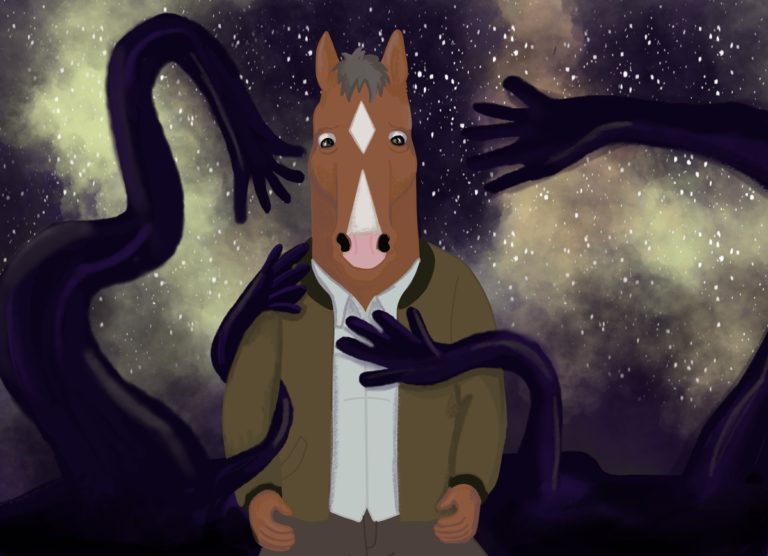
    The episode begins in a psychedelic dream state of the main character at a dinner party with passed away friends and his father - taking the form of a race horse that commited suicide by jumping off of a bridge - performs this poem.  Bojack faces the inevitability of death, facing all the people in his life who have died.  As his mental palace keeps collapsing, the audience slowly realizes that Bojack himself is in such a situation as he is drowning in his pool in real life.  This episode of the show blew my mind and is still one of my favorites in all of TV, and the poem is a huge part of why - that scene still sticks in my head.  I think poetry is immensely impactful in larger contexts, especially when its theme or message tackles something presently relevant.  
Crew, cast behind 'BoJack Horseman' discuss their individual impacts on the  show - Daily Bruin

--------------------------------------------------------------------------------------------------------------------------------------------------


My (shorter) rendition (and happier):


The weak odor smells unreal 

The flavor must be sublime 

His saliva drools with appeal

Open wide, it's time

to eat the Taco Bell.

.......

But that is all, my stomach is full

crumbs drown my face

Before I ate I should've predicted

my toilet knowing no grace

I really should've thought about 

my toilet knowing no grace

I wish I could've known about 

my toilet knowing no grace


Sunday, February 11, 2024

I (don't) hate poetry. Poetry hates me. We are a big happy family.

     I like poetry, but I don't love it.  I feel like if I had to rank every form of work - there would be many things above poetry: movies, books, shows, short stories, songs, etc.   However, I can appreciate art and poetry is definitely an art.   And I am going to contradict myself here, but you really can't compare different works (even though I just did).  

    The lyrical, rhythmic nature of poems that can be read aloud or silently creates an art form unlike any other.  I have read many emotionally impactful poems and loved them but there is something about them that does grind my gears and I wasn't able to pick it out until Pooja brought something up.  She mentioned how she likes those 2 line poems that appear on TikTok every once in a while.  

Wow so profound.  Yes this is the stuff Pooja likes... I am not judging!!  Its an art and i actually have seen some really creative poems like these, but it makes me realize what I dont like about poems.   It's so easy to make them bad.  

Poem's with their rules, or lack of, and their immense symbolism and rhythm and meter, are difficult to create, but also easy to do in the sense that they are short.  If any person decides to write a couple lines, they have a poem! and it could be really bad.  Trying to be artful and creative in a really stupid (subjective) way, to the point that it becomes corny.   But in that case they actually end up being ironically funny, so maybe their worth lies there?   Maybe it is okay because there will always be someone who appreciates your art, like Pooja.   Maybe an understanding of even the most boring and subjectively "bad" forms of art is something we need to appreciate.  Maybe Pooja knows something I don't.


Monday, January 29, 2024

english hokey pokey

     The greatest thing that shifted in me this semester as a reader and writer is noticing and making connections between works: intertextuality.   I already love making pop culture references, in real life and in writing essays or projects (just look through my blogs), but it went to another level after this class.  Intertextuality was one of the first things we talked about in the class - about how every story has some general structure to it, a quest of sorts.  This sort of validated my experiences because I always loved noticing parallelism across stories and then bringing that to fiction that is more akin to an English class, like Oedipus or The Death of a Salesman, became natural to me. 

    The idea that all works build off of previous ones is so profound to me, we first came across that idea in How to Read Lit Like a Professor,  and it has stuck with me ever since.   TDAS came so far after Oedipus, but as tragedies they share much in common, without the latter, Willy Loman's story would never have existed.  Nevertheless, these stories are different but you can piece together influences and straight up references, something I have done before, but in a very different light.  Now I consider the time period and the historical context of when and where a story is written.  All that stuff matters and it feels like in this class I am forced to notice it.  Even in essay prompts, if iI write to answer the prompt, I may use several sources to argue it - or even if I only use one, I think about another work that could have been used as well!

    I think every piece we have consumed in this class has impacted me, albeit to different extents, but together I feel like the more I read or watch, the more these links of intertextuality are being made and the more I am noticing them, and the side effects of that are nice since I can understand the message a new story far easier!


Thursday, January 11, 2024

Redeadtion

      Redemption arcs are satisfying.  Watching a character at rock bottom slowly work their way back up onto a moral high ground, is one of the most entertaining character developments that can occur.  

     In a tragedy, redemption is few and far between.  The story ends at rock bottom rather than giving the character a chance to recover.  A prevalent way for this to occur is by death.  Othello kills himself at the end of Othello, and Willy Loman kills himself at the end of The Death of a Salesman.   Does death act as a punishment for the tragic hero, or as an absolution from their sins?  Is it a redeeming act for these two characters, for example, to kill themselves after everything they’ve done?  I think it’s none of these.  Death simply acts as a way to provide defined closure to a character arc on a downturn, there is no open-ended nature to it - just a consequence of the tragic events in the story.   It usually removes redemption as an option, which has no place in a traditional tragedy, depending on how it’s defined, but that doesn’t necessarily mean that redemption can’t be possible for certain tragic heroes.


    A tragedy, according to Britannia, is a “branch of drama” that tackles the “terrible events encountered or caused by heroic individual”.  Aristotle defined “moral ambiguity” as the true core of a tragedy, and Shakespeare loosely followed that train of thought in his Elizabethan tragedies.  Othello is both somewhat understandable and reprehensible as his actions drive his downfall and bring other characters down with him - and this stands precisely true for our perception of Willy Loman in modern tragedy.  We feel bad for these characters, but cannot admit that it isn’t their fault.  Both are tragic heroes with fatal flaws in a plot-driven story that grants some knowledge to the audience (a lesson).   Tragedy is impactful to the audience by ending at the lowest of lows, and death is one of the best ways for that to occur.  Can redemption even truly fit in here? 


    Redemption is the “act, process, or instance of serving to offset or compensate for a defect” (Merriam-Webster).  In terms of character development, it serves as a way for a character to make amends for past mistakes or wrongdoings and become more virtuous, perhaps through some heroic acts. It appears that on the surface, redemption can certainly occur in a tragic story.  A character with a reprehensible fatal flaw that ends up being his wrongdoing, is still likable, pitied, and rooted for - it's not out of the question for a character to turn it around - unless they die of course.


                                                                            dead    


In fact, death is a way for tragedies to completely remove redemption as a possibility, marking the finality of a character.   It’s hard to imagine that Othello would keep being so gullible, and not want to make amends with those he hurt, like Cassio, after he realized he was manipulated into hurting himself and others.  But since he dies, that is not up to speculation.  So to find redemption in a tragedy, we may have to remove death as a factor.


Liang mentions how, unlike Shakespearean tragedies, Classical Chinese tragedies end differently.  “Shakespeare usually depicts a noble person's final calamity resulting from his own defect in personality; most of the heroes in classical Chinese tragedies are common people with a perfect moral quality, who suffer a lot to defend justice and end up with a good result”. In fact they seem fundamentally very different, besides the suffering.  In fact no matter how twisted or unique the word “tragedy” may get, suffering to invoke pity or any strong reaction from the audience seems to be. common along cultural and time barriers. The problem is that the “perfect moral quality” removes redemption as an option too.  In this tragedy, the characters are already good, there is nothing to redeem.  Unfortunately removing death does not completely guarantee the possibility of redemption.


There is no room for redemption in a tragic story as defined by certain classical writers and authors. Still, in present popular culture, it is easier to find a character that fits the strain of a “tragic hero” yet still finds a sort of redemption that goes against that traditional idea of a tragedy.   Common examples of redemption that people consider in modern pop culture include characters like Darth Vader, Arthur Morgan, or Prince Zuko.  


             SPOILERS FOR EACH OF THE ABOVE CHARACTERS AHEAD!!!


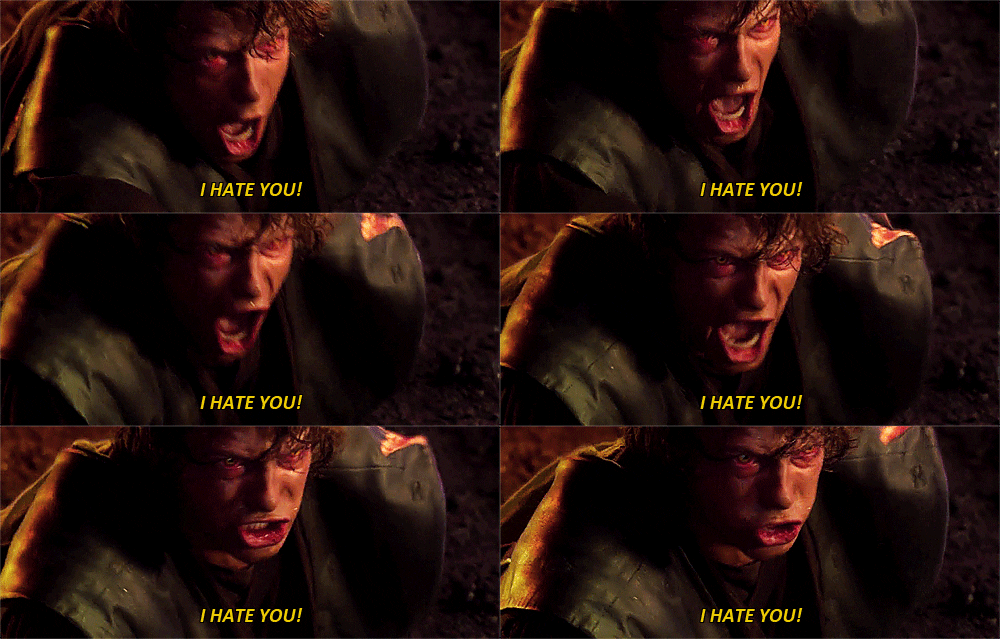
Anakin Skywalker’s turn to the dark side is tragic.  Manipulated to hate those who raised him, accidentally killing his loved one, being forced to fight his master and best friend who defeated and mutilated him: all of this resulted in him becoming the iconic villain clad in black armor.   In fact, the entire prequel trilogy of Star Wars has the makings of a tragedy: The Jedi Order’s ignorance and arrogance allowed for their downfall and the very soldiers and friends they fought alongside for years turned on them inexplicably, killing almost all of them. However, the lack of death for a few of the main characters prevents this story from ending (or the fact that the original trilogy already existed). Unlike how Othello or Willy died at the end of the tragedy,  Anakin, his newborn children, Obi-wan, Yoda, and more are all still alive.  There is still the possibility for redemption for Vader and for the world.   I mean, Episode IV is quite literally called “A New Hope."  Although in the end Vaser isn’t redeemed in the eyes of the world, still technically a mass murderer.  He is redeemed in the eyes of his son, saving him and many more with just one act.  


Tragic heroes like Vader are perfect for redemption arcs, because they have shown some redeeming qualities, have been good before, or have foreshadowed their better side in some way.  If Shakespeare decided to add a redemption arc, it would be for Othello, not for Iago, who is a pure villain who has shown no good - in which case a redemption would be somewhat unsatisfying.   


In Avatar: The Last Airbender, Zuko’s redemption is seen from a mile away.  He is introduced as a villain with honor, only trailing the Avatar to capture him and restore his standing with the Fire Nation, who banished him.  Throughout his journey he takes refuge within the people who feel the oppression of his very nation he seeks to rejoin, and has his views shaken.  His well-mannered uncle accompanies him and also influences his evolution.   As a character, he is paralleled with Aang, the main character, and overall a change in heart is foreshadowed.  Not every character is fit for a redemption arc.  If Zuko stayed by his father, the leader of the nation, he would have ended up like his sister - cold-blooded, and psychopathic.  However, the combination of certain personality traits and the right experiences and influences changed him for the better.  Othello had positive qualities that were highlighted early on, but someone like Iago, a pure villain like Fire Lord Ozai, has no real place for redemption as the story stands.  For redemption to be satisfying, it must make sense, and tragic heroes tend to have “good” qualities besides their fatal flaws that they can cling to, to restore themselves.   Redemption is easily a possibility from a character development standpoint for tragic characters.


                      Eventually taking the throne as Fire Lord and working to change the world for                     

                                       the better.... sounds like redemption to me.  


However, Avatar is not a tragedy.  Zuko doesn’t die at the end of this story.  And although Vader dies and his initial downfall is tragic, his later actions completely save the galaxy and are hard to describe as tragic.  They are simply characters with tragic backstories or lives that went down the wrong path and redeemed themselves, which feels like a step down from what we are looking for.


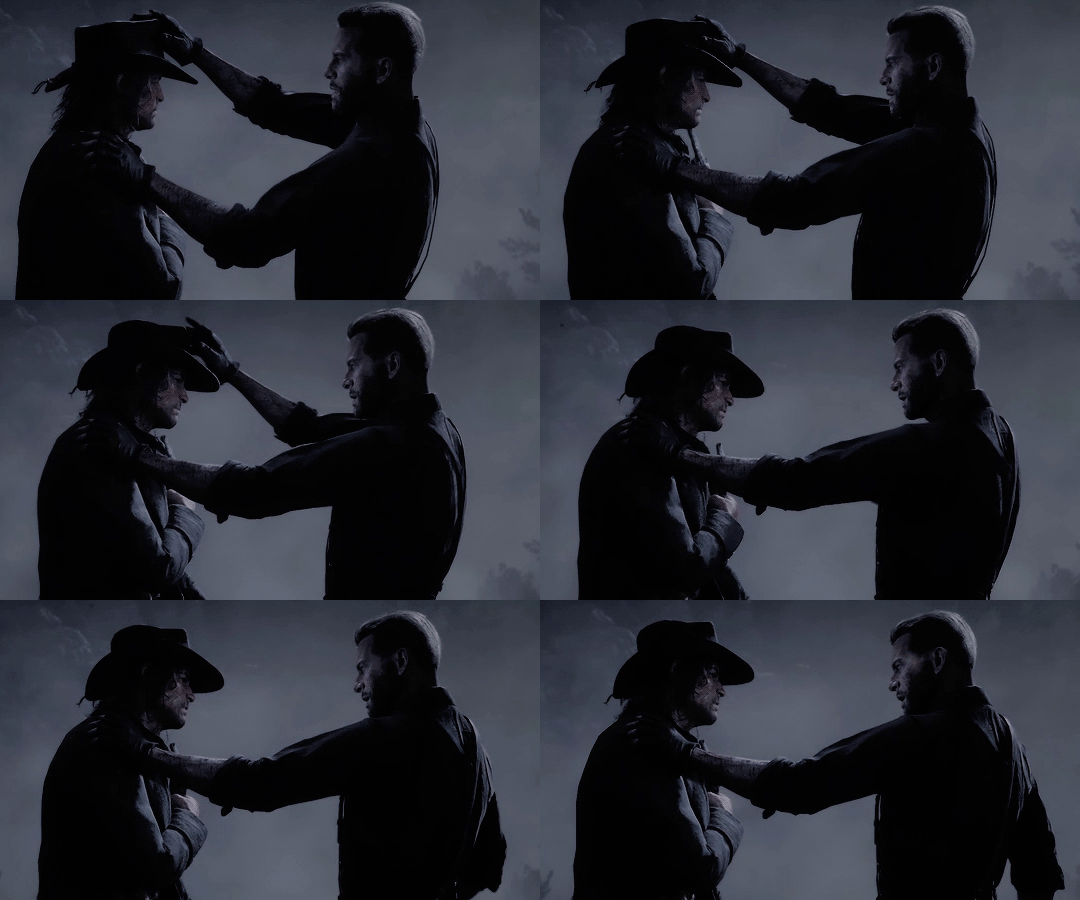
Maybe we can find the story we are looking for in a unique narrative piece of media - a video game. In Red Dead Redemption 2 (yes it's literally in the name), Arthur Morgan is an outlaw and a member of the Van der Linde gang during the decline of the Wild West era. Participating in many crimes and death, he was not a good man, but he was honest.   After contracting tuberculosis, he was given a deadline for his life, which was a catalyst for change, even though doubts about his way of life and allegiances were being questioned constantly.   Through the narrative vessel of a video game, the player has the option to keep Arthur as someone cold and aggressive - dying brutally - or as someone empathetic and selfless - dying peacefully after helping his friend’s family escape the gang’s downfall.  No matter how you look at it, the story is tragic in almost every way.  Arthur is a member of the gang, and they are the reason for their own downfall. However, he can slowly redeem himself as he helps the community and understands the way to truly live, as he slowly dies. A tragic hero dies a tragic death as his friends lose trust in him and he has to find what’s important in the world.  This is, in my eyes, a tragedy with death and redemption.  It has it all.  Would someone like Shakespeare consider this to be a tragedy? 


    No matter the answer to that question.  We have found that “tragedy” has many different connotations.  Me dropping my phone is tragic.  Willy Loman’s suicide is also tragic.  Even in a literary sense, tragedy is different for different cultures and eras, but when considering a tragedy that must end in death, redemption is removed as an option. For one that doesn’t end in death, it seems to, paradoxically, also be removed as an option.   A middle ground is certainly possible, but for the classic stories, a simple death or success is just impactful enough without the recovery a redemption may provide.  Sometimes just the purely negative events and emotions are what the writer wants to convey through catharsis and audience reaction.


      The very friend Arthur saves (John) eventually succumbs to the cycle of revenge himself...


                                                                            .....................


                                                                        Works Cited

Liang, Junqing. "On Tragic Heroes: A Comparative Study of Hamlet and the Orphan of Chao." Theory and Practice in Language Studies, vol. 5, no. 10, Oct. 2015, p. 2076+. Gale Literature Resource Center, link.gale.com/apps/doc/A446734731/LitRC?u=lom_macombtgps&sid=bookmark-LitRC&xid=10e3a0cd. Accessed 21 Dec. 2023.


"Redemption." Merriam-Webster.com Dictionary, Merriam-Webster, https://www.merriam-webster.com/dictionary/redemption. Accessed 10 Jan. 2024.


Sewall, Richard B. and Conversi, Leonard W.. "tragedy." Encyclopedia Britannica, 20 Nov. 2023, https://www.britannica.com/art/tragedy-literature. Accessed 20 December 2023.


Sunday, December 3, 2023

Mike Wazowski takes down Othello


     I'm a sucker for the smart, manipulative villain characters that can pull the strings to get what they want.  I like seeing the bad guy be clever and outsmarting everyone, so naturally I'm intrigued by Iago in Othello. His motives are ambiguous but clearly driven by jealousy.  However despite being a villain who is lying at face value, when his dialogue gets serious (still in an attempt to manipulate), he speaks in greater truths that transcend our expectation of him as a character.  


    "O beware, my lord, of Jealousy, it is the green-eyed monster whom doth mock the meat it feeds on. That cuckold lives in bliss Who, certain of his fate, loves not his wronger" he advises to Othello after planting that very seed of jealousy into his superior. This line is insane when you think he is also speaking about himself, its not a stretch to think Iago is self-aware about his unhealthy obsession with taking Othello down. He knows this "green-eyed" monster is destroying him but is willing to take the chance to spread this to the person he wants to take down.

    In a story that acts as a warning to the harmful nature of envy and jealousy, it is unnatural, but very compelling, that the most jealous, most evil character in the story is the one speaking the wisest and greatest lessons of dialogue about that theme.

                                                           The "green eyed monster"??  


Sunday, November 12, 2023

😐

Meursault after his mom dies:  😐

Meursault after befriending a man who talks about physically abusing women: 😐

Meursault after the same guy asks him to assist him in getting an ex over: 😐

Meursault after watching said guy physically abusing his ex: 😐

Meursault after killing a guy: 😐


    Seems like Meursault is the most nonchalant guy on the planet.   His lack of affect for everything that occurs around him gives the implication that Camus is trying to depict a neurodivergent character (although he is still very guilty in the events that occur: he did shoot a guy four times after he died for no reason).   Nevertheless, his unique perception of the world highlights the existentialism in the novel.   

    Meursault himself says that he can either stay or not stay at the beach, as every decision leading up to him pulling the trigger was his own, and no outside influence intervened.  He was free to forge his own path the whole time.  To make sure even morals don't affect him, Camus likely characterized Meursault in a way that "not caring" is typical for him.  It highlights the unbound nature of freedom that he has.  Realistically with his mindset, he may well just do anything - and this probably falls further to absurdism when we consider how other characters consider Meursult's actions.

    The Jury tries so hard to justify Meursault's reason for taking a life he does not recognize that there is no reason, which is the same thought process that the reader goes through as this event occurs.
    
    As more of the novel unfolds, Camus's philosophy will unwind further as well, as it has so far, very bluntly.  Too blunt to the point that none of the characters are likable...  or maybe that's the point, but it does make the book far more boring.  I really just don't care about the stakes.


Me when Meursault got arrested because I just don't care about him at all: 


Neutral Face Emoji (U+1F610)

Friday, October 27, 2023

“The Thing” but PG-13?


    What keeps you going?  Through every form of adversity what is it that keeps on your feet?  People will typically answer that question with vapid, yet very valid, responses: family, potential for success, happiness, some sort of goal.   However, all of these ideas have a deeper root into a person’s reason for going on, as a sort of instilled mental train of thought.  We all have a sort of mantra that drives us, and that may well come from our family, our goals, and desired mental states.  This is also the case for fictional characters in most literary works.

    Every story takes the form of a quest.  Thomas C. Foster lists five things that make up a quest in How to Read Literature Like a Professor : “(a) a quester, (b) a place to go, (c) a stated reason to go there, (d) challenges and trials en route, and (e) a real reason to go there.”   He adds that for the stated reason, the character fails and then finds the real reason they were there (usually some sort of internal learning).   However he fails to mention how this quest is truly driven by the character’s mentality.  The reason a character even has a stated reason, the reason they dont give up after faced with challenge, and the reason they find their real reason to be there.  Every character has an internal mantra: a word or a phrase that embodies their view on the world and empowers them to complete their “quest.”   This internal motto gets challenged and beat down, until their faith in it becomes questioned.   Ultimately it leads to that belief becoming stronger and possibly taking on a new broader meaning.  

    In The Alchemist, by Paulo Coelho, Santiago, is introduced to the idea of fate.  The mysterious king claims that the “entire universe will conspire” to help him achieve his “personal legend.”  Santiago seeks a treasure, as that was prophesied to be his personal legend.  This journey takes him years, and he constantly questions if his fate is true.   In fact the very first thing that occurs is that a thief steals all his money and he wants to give up and go home.  He tries to make enough money to get home by working at a crystal shop, but the owner of the shop shares how he gave up on his own personal legend.  He also introduces Santiago to a word that he keeps remembering as a symbol of the idea that he will achieve his destiny.   “Maktub.” It is written.  Santiago continues to remember this word every time he questions his fate, and every time he makes progress towards it.  Santiago’s treasure finally takes him back home, where he started. Foster predicts that every character has a real reason for going somewhere, and for Santiago it was him learning about how the universe was one and how he was one with it.    He traveled all through various locations throughout the years,  but his treasure was literally buried at home and he learned some great knowledge on the way.  This quest furthered his belief in “Maktub.”


    In Piranesi, by Susanna Clark, the main character is trapped in a labyrinth and his memories of the outside world are gone.  In the years he has lived in the endless halls, he gains a respect for it.  A respect for the life it gives and shelters, the beauty and symbolism of its statues, and the fact that it’s his home.  He surmises that “The Beauty of the House is immeasurable; it’s Kindness infinite.”   When his reality comes into question, this very mantra prevents him from seeking the truth about his existence in the labyrinth.  This is his home, there is no need to question it.  Everything that happens occurs because the house wants it to.  But eventually he comes to reason that if everything happens for a reason, maybe these peculiar hints that something is amiss are meant to be noticed.  Thus, his logical mind persevered to find the truth.  Even when his reality is flipped upside down and he finally comes to the outside world, he notices the beauty of the world and notices people and ideas that are mirrored back in the labyrinth and again states that “ The Beauty of the House is immeasurable; it’s Kindness infinite.”   This time the “house” also takes on a new meaning that includes the outside world and life in general.  

    Both these characters have a motto that is somewhat spiritual in nature, but that doesn’t always need to be the case.  Think of Spider-Man: 

                                                  Some history on this iconic phrase

In many iterations - comic runs, movies, shows - Spider-Man constantly questions this belief in himself from the adversity he faces.  However at the end of each storyline he finds that it stands even more true.  You can find this in so many stories, however ridiculous or serious they are.   Think of any story and in some way, some more vague than others, you will find this in effect.

   Although Foster didn’t acknowledge this “mantra” directly,  he did point out that at the end of every quest, the real reason for it will reveal itself.  Even though Santiago searched for treasure to leave his boring shepherd life and travel, and even though Piranesi wanted to learn more about the house and explore it, these aren’t the real reasons they faced their challenges.   The real reason is the internal conflict and subsequent learning from all the events they face on their quest, and how that learning manifests itself on a character’s motto.   

    This concept is mirrored in real life.  Although in literary works,that mindset is better portrayed as a simple phrase or word, for us it may be a little more complicated and less easy to express.   Nevertheless, everyone has a adage that they take on as their perception of the world.  This perception will constantly evolve as it gets challenged and supported by different life experiences.  Our perception may even evolve with the literary works we consume.  Someone who reads the alchemist may take a piece of Santiago’s opinion of fate with them.  Someone who reads Piranesi may gain an appreciation for the little details of the world.  We are an amalgamation of our experiences and that is what the evolution of our internal monologue proves to us.  Imagine John Carpenter’s, The Thing, but with immaterial ideas instead of the gruesome assimilation of people.


htank oyu

 Acknowledgements: Lots to thank.. My car is barely alive and is long overdue for maintenance in many ways.  Somehow still gets me   around....